Restaurant conversations can be difficult to follow when environmental noise competes with your focus and hearing. Our specialists can evaluate hearing under both calm and noisy listening conditions to establish why noisy rooms present such difficulty. When we isolate the root mechanism behind your difficult hearing, we guide you toward customized communication solutions.
Why Do I Hear Well in Quiet but Struggle in Restaurants?
In quiet conditions, an optimal signal-to-noise ratio ensures that the desired speaker sounds markedly clearer than surrounding sound. Modern restaurant environments create the complete opposite listening environment. Overlapping chatter, piped music, kitchen clatter, and hard-surface reverberation mask speech, forcing the brain to expend immense cognitive effort to track conversation.
Such listening challenges typically stem from high-frequency hearing loss, auditory-processing deficits, or accumulated noise-induced trauma. Cognitive exhaustion, physical fatigue, low ambient lighting, and increased distance from your conversational partner further compound the challenge. It is common to display normal baseline audibility on conventional hearing tests while failing comprehensive speech-in-noise testing. Inability to track speech in crowded restaurants merits audiological evaluation even when standard daily hearing sounds completely normal.
The Audiological Process for High-Frequency Hearing Loss
Diagnostic assessment begins by documenting specific listening breakdowns, recreational noise exposure, tinnitus symptoms, medications, and hereditary auditory patterns.
Pure-tone audiometric evaluations measure the absolute quietest sounds audible across specific octave frequencies using air and bone conduction. A clinical presentation of high-frequency loss produces a downward-sloping audiogram where auditory thresholds worsen significantly at higher frequencies. Comprehensive evaluations frequently include impedance tympanometry to examine middle-ear function and recorded word-recognition testing to measure speech understanding.
A quiet sound booth cannot replicate complex dining room acoustics, which makes clinical speech-in-noise testing especially informative. This diagnostic protocol measures your capacity to understand target words or sentences against progressively louder multi-talker babble. Combined, these clinical findings determine whether your symptoms stem from acoustic audibility, word clarity, central noise filtering, or multifactorial causes.
Auditory Processing Disorders: Impact on Adult Communication
A central auditory processing disorder disrupts the neurological transmission and cognitive interpretation of sound waves. The peripheral auditory system may register sounds within normal limits, yet the brain falters when separating competing acoustic inputs, sorting speech sounds, or tracking fast speech. We systematically verify peripheral hearing health before establishing whether an advanced auditory-processing evaluation or medical referral serves your needs.
What Strategies Can Improve Hearing in Noisy Environments?
Small, intentional adaptations can optimize the clarity of speech reaching your ears and leverage helpful visual speech cues. Before leaving home, identify quieter dining venues or plan to eat during less crowded service times. Dining locations utilizing sound-absorbing elements like booths, felt panels, window curtains, and carpet offer better acoustics than high-ceilinged rooms with hard surfaces.
When arriving at the dining venue:
- Reserve a table located well away from kitchen doors, active bar counters, overhead speakers, and banquet groups.
- Position your chair against a perimeter wall to diminish competing auditory chatter behind your head.
- Position yourself to directly face companions under bright lighting to enhance facial comprehension.
- Keep conversational proximity as close as comfortably feasible to preserve acoustic signal strength.
- Turn your better-hearing ear toward the specific speaker you want to hear most clearly.
- Ask the speaker to rephrase the missed portion instead of repeating everything.
- Actively confirm key information rather than smiling and guessing at ambiguous dialogue.
- Step away for a brief auditory rest when cognitive listening fatigue begins to set in.
- Ask companions to speak clearly at a natural pace.
- Raised or shouting voices warp acoustic phonetics and rarely improve speech intelligibility.
Assistive Listening Technologies for Noisy Environments
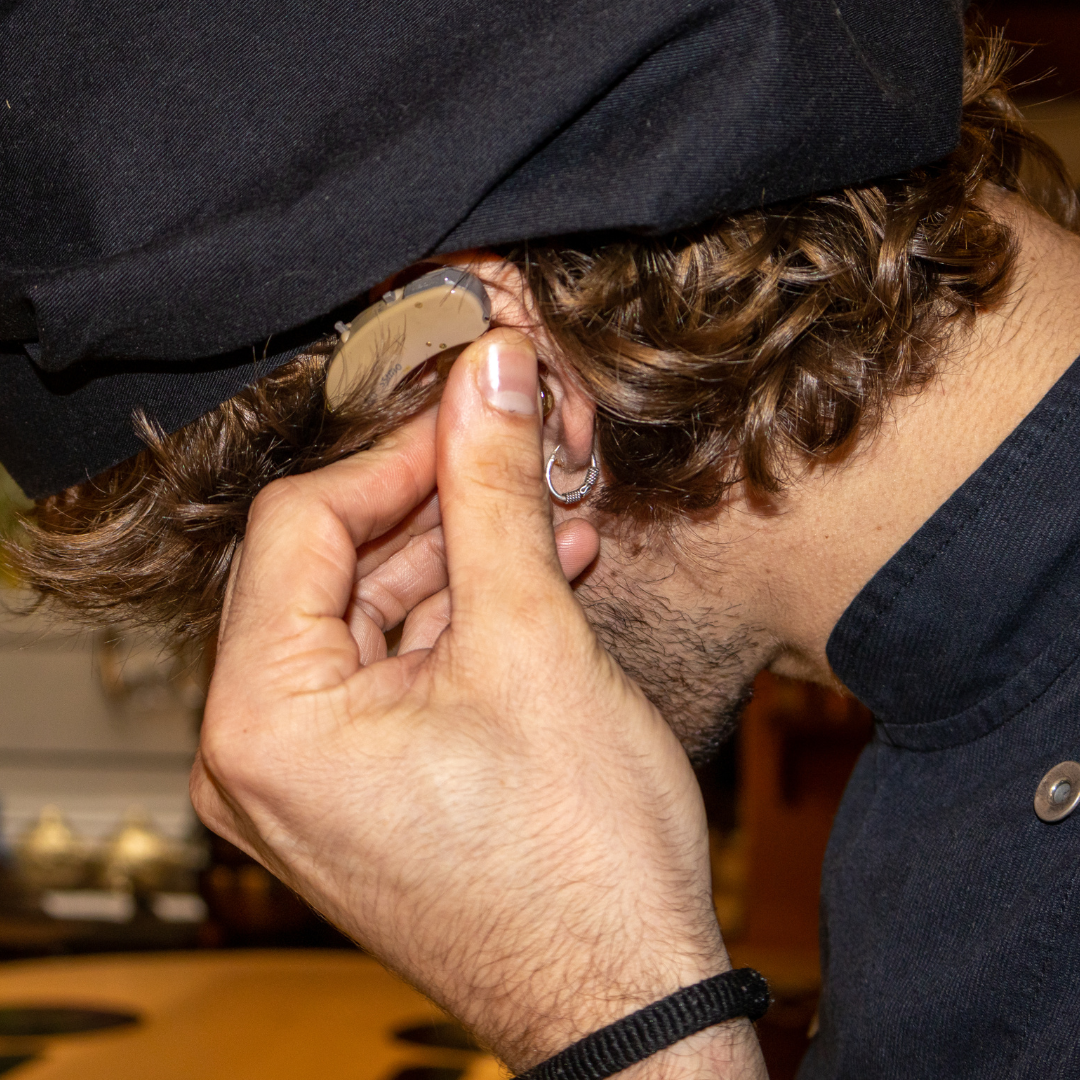
Determining the proper hearing technology hinges on the underlying disorder, everyday listening environments, and whether peripheral hearing loss is diagnosed. Modern clinical hearing aids integrate directional microphone polar patterns, automated digital noise suppression, and personalized restaurant memory settings to highlight frontal speech and reduce background competition. Patients must uphold realistic expectations because modern amplification cannot strip out every ambient human voice completely.
Wireless remote microphones provide the most effective enhancement to real-world signal-to-noise ratios. Worn on the speaker’s collar or set on the table, the microphone broadcasts direct audio to paired hearing aids or specialized receivers. This targeted setup effectively neutralizes the negative impacts of room distance and interfering background noise.
Supplementary auditory solutions include:
- Table microphones for small-group conversations
- Hearing-loop telecoils that stream clean audio in loop-equipped establishments
- Mobile speech-to-text applications delivering instant visual captions during dinner
- Over-the-counter hearables equipped with directional speech-enhancement algorithms
- Decibel-level applications and restaurant rating guides for finding quiet tables
We will help compare available technology, verify device compatibility, and instruct you on utilizing your selected hearing equipment.
How Medical and Audiology Specialists Resolve Hearing in Noise
A thorough audiological evaluation expands the diagnostic scope well past simple quiet listening performance. We assess the specific acoustic settings, speaker dynamics, and volume levels that disrupt your hearing to administer targeted evaluations. The assessment may include pure-tone thresholds, middle-ear testing, word recognition, and speech-in-noise measures. Specialized auditory-processing testing can be ordered when patient history and preliminary audiometric findings warrant deeper neural investigation.
Any sudden, asymmetric, or rapidly deteriorating hearing loss demands immediate medical evaluation by an ear, nose, and throat physician. Dedicated individualized care pinpoints the underlying auditory cause rather than dismissing your struggles as standard restaurant noise.
Contact Us for a Hearing Evaluation Today
If dining in loud spaces leaves you feeling isolated, fatigued, or guessing at missed speech, contact us to schedule a thorough hearing evaluation. We will help you navigate hearing in noisy environments by implementing advanced hearing aid options, assistive accessories, or therapeutic auditory strategies tailored to your lifestyle.
Get in touch with our team to request an appointment and rediscover confident, stress-free restaurant conversations.