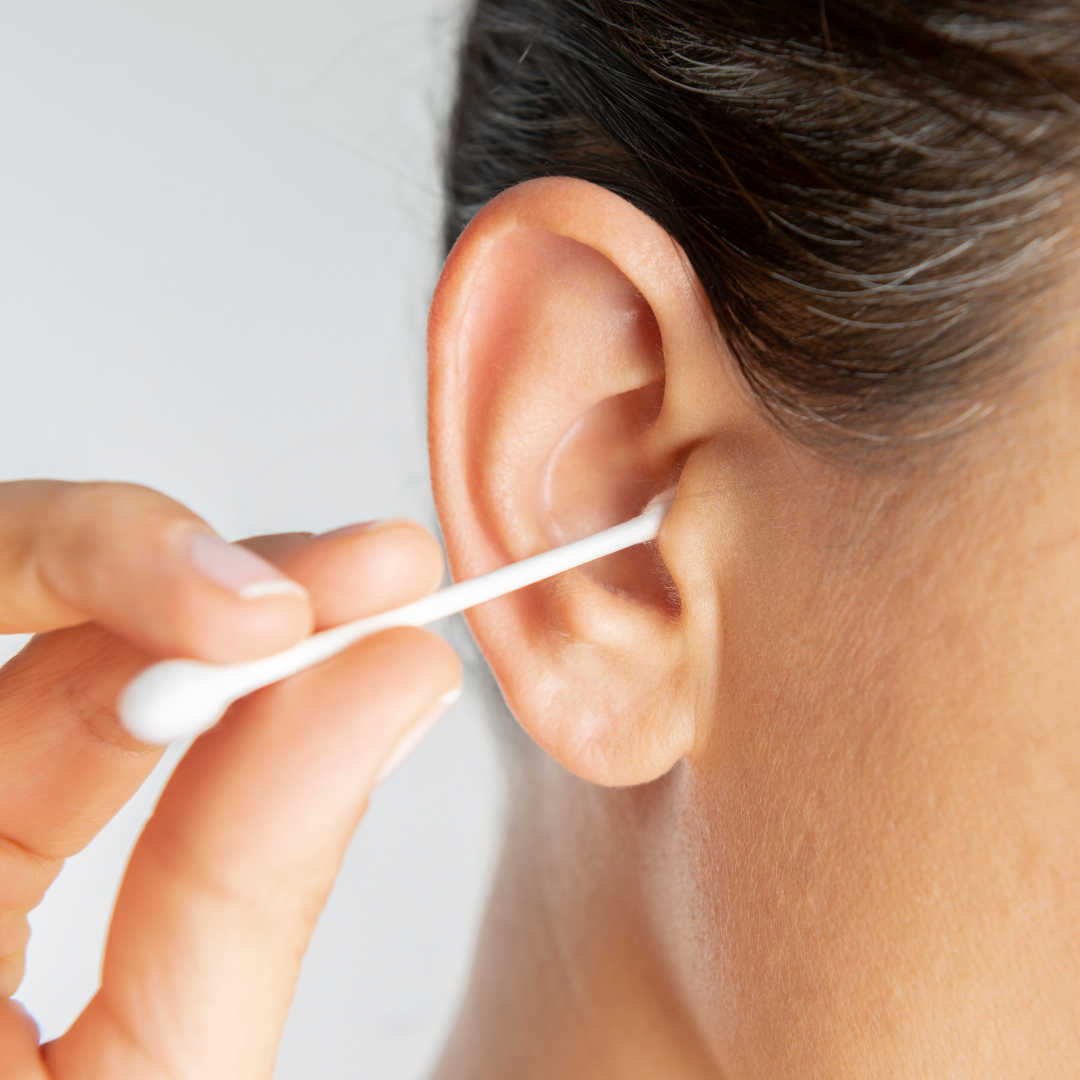
While cotton buds look like simple cleaning instruments, inserting them directly into your ear canal complicates hygiene and can injure sensitive structures. We assess whether your earwax demands professional intervention and provide customized care strategies that match your clinical profile. The auditory canal generally manages its own cleaning; however, should impaction arise, our team provides safe clinical earwax removal.
Why Are Q-Tips Bad for Your Ears?
Biologically, earwax—known clinically as cerumen—is not an unhygienic waste product. Cerumen works to entrap airborne particles, deter infectious pathogens, hydrate the auditory canal, and protect thin dermal layers. Rhythmic jaw motion and outward dermal migration move drying wax toward the external orifice, where it effortlessly washes away.
Placing a cotton applicator inside the canal completely interrupts this automated self-clearing cycle. While the fibrous tip might extract superficial wax particles, it predominantly forces deeper accumulations toward the tympanic membrane. Frequent swab use consolidates soft wax into a rigid barrier, generating an uncomfortable plugged sensation that fosters continuous overcleaning.
Although swabs can sanitize the outer folds of the auricle, they should never penetrate the delicate ear canal.
Types of Ear Injuries Caused by Cotton Swabs
The epidermal tissue coating the ear canal is thin and tears under minimal friction. Minor scratches can trigger localized pain, bleeding, and bacterial infiltration, substantially elevating the risk of otitis externa. The cotton end can also dislodge from the applicator, creating a retained foreign body within the ear.
Documented injuries associated with cotton swabs include:
- Earwax compressed tightly against canal walls
- Cutaneous tearing, swelling, canal inflammation, or bleeding
- Pathogenic infection involving the ear canal
- Retained cotton tips or foreign debris inside the canal
- Structural tears or perforations across the eardrum
- Mechanical trauma to the middle-ear ossicles behind the eardrum
- Transient hearing reduction or permanent sensorineural loss
- Onset of tinnitus, positional dizziness, or acute ear pain
Although catastrophic damage remains relatively rare, unexpected arm bumps, hand slips, or excessive insertion depth easily cause acute harm.
Recommended Schedules and Timelines for Cerumen Removal
Most individuals do not need to perform earwax maintenance on a calendar schedule. Normal ears migrate cerumen toward the opening constantly, allowing routine bathing to cleanse the visible exterior. Overcleaning can dry or irritate the canal and may increase the likelihood of infection or impaction.
Professional removal is necessary when wax obstructs the canal, obscures our view of the tympanic membrane, hinders a hearing aid, or creates physical symptoms.
Safe Home Strategies for Managing Earwax
In the absence of earwax symptoms, allowing natural physiological clearance is universally the safest strategy. Gently wipe the outer ear surface with a damp washcloth and allow internal self-cleaning mechanisms to work.
When wax needs softening, we may recommend an over-the-counter cerumen-removal product or drops containing ingredients such as mineral oil, glycerin, saline, or carbamide peroxide. Use only the labeled amount and for the labeled duration. Immediately halt applications if the medication triggers pain, profound dizziness, skin irritation, or deteriorating symptoms.
At-home ear irrigation is not universally safe and requires clinical clearance and technique demonstration from an audiology professional beforehand. Absolutely avoid using high-velocity dental water jets inside your auditory canal. Steer clear of dangerous tools such as ear candles, metal curettes, lighted camera tools, bobby pins, and home vacuum devices. These products may burn, cut, puncture, or push wax farther inward.
Recognizing When Earwax Requires Clinical Intervention
Schedule an appointment when an ear remains plugged after an appropriate softening treatment, wax appears deeply impacted, or home care repeatedly fails. Expert removal is the safest path for patients who struggle to hold still, individuals with narrow ear canals, hearing aid wearers, or those with surgical contraindications to irrigation.
Obtain a focused audiological evaluation for:
- Severe ear pain, intractable itching, or outer ear tenderness
- Blood, pus, clear fluid, or unpleasant-smelling drainage
- Systemic fever spikes or acute swelling near the external ear
- New acoustic tinnitus sounds or unstable balance sensations
- Hearing loss that develops suddenly or continues after wax removal
- Concern regarding a perforated eardrum or foreign cotton debris
- Chronic cerumen impactions that clog or disrupt hearing aids
Treat sudden hearing loss in one ear as a medical emergency rather than assuming it’s wax. Rapid audiological testing differentiates simple cerumen obstruction from serious, time-sensitive inner ear disorders.
In-Office Procedures for Clearing Earwax Blockages
The clinical process starts with high-magnification otoscopy or microscopy to establish cerumen presence and screen for infections, abrasions, or tympanic perforations. Selecting the optimal extraction technique depends upon cerumen density, canal geometry, patient health history, prior otologic surgeries, and procedural comfort.
Safe audiological extraction methods include:
- Topical cerumenolytic drops applied prior to or during the clinical visit
- Safe low-pressure irrigation using body-temperature solutions on intact tympanic membranes
- Safe, gentle suction extraction executed under direct microscopic guidance
- Manual instrument clearance utilizing dedicated ear loops, fine curettes, or small forceps
Continuous visual monitoring enables the practitioner to navigate around sensitive epithelial tissue and pause immediately if discomfort arises. Combining multiple extraction techniques is sometimes required for stubborn, dehydrated, or densely consolidated cerumen. After clearance, we conduct a follow-up visualization to ensure the canal walls and tympanic membrane show no complications. If aural fullness, ear ringing, dizziness, or auditory impairment remains after cleaning, further diagnostic evaluations can identify the root issue.
Schedule Professional Earwax Removal
If you notice a blocked sensation or changes in auditory clarity, contact us for an evaluation rather than inserting a Q-Tip. We begin your evaluation with an in-depth review of symptoms, surgical ear history, hearing aid maintenance, home cleaning attempts, and individual tendencies toward wax accumulation. Connect with our practice today to reserve an appointment for safe, professional earwax removal.