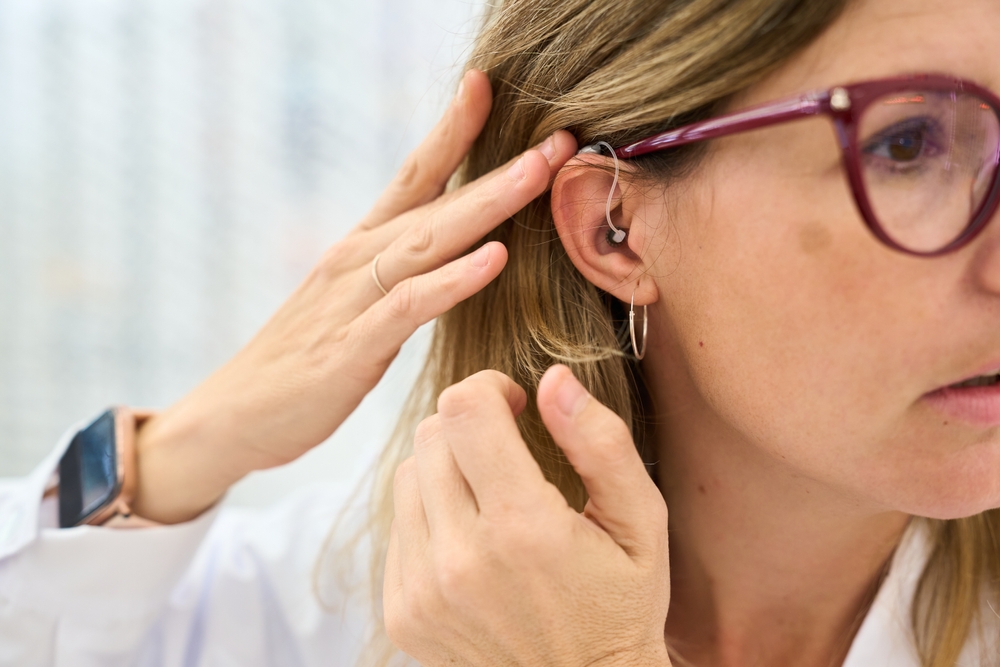
Many people delay getting hearing aids because they don’t think they’ll like how they look or feel. Historically, old-fashioned hearing hardware was bulky, obvious to onlookers, and closely linked with the stigmas of aging. Regrettably, some people even experienced social alienation because acquaintances falsely assumed that wearing a visible aid signaled a complete inability to comprehend spoken dialogue.
Because this archaic mental image endures, thousands remain deeply reluctant to schedule an initial audiometric evaluation. But the reality is that today’s modern hearing aids look and feel very different from what you might expect. Ongoing innovations in cosmetic engineering mean today’s options are ultra-small, seamlessly comfortable, and beautifully hidden from public view.
If cosmetic anxiety has caused you to delay treating your hearing loss, it is highly recommended that you evaluate the sophisticated options now available.
The Outdated Devices of Your Imagination Have Been Replaced
When asked to visualize a hearing instrument, the average person still envisions an awkward, highly conspicuous piece of hardware visible from yards away. If that is the visual you hold, you are fundamentally remembering outdated medical equipment from decades past.
Over the last few generations, this medical technology category has experienced a total structural evolution. Exponential leaps in digital circuit shrinking, industrial design, and audio computing have totally redefined contemporary hardware. They’re smaller, sleeker, and designed to blend in (or disappear entirely).
A multitude of current designs fit entirely inside the physical ear canal, ensuring they remain hidden from view during normal social encounters. Different configurations sit comfortably behind the ear but feature such a low profile and featherweight build that observers naturally miss them.
Primary Hearing Aid Styles, From Invisible to Barely There
To understand how these sophisticated medical devices are physically configured, review this concise anatomical breakdown:
Deep Canal Solutions: Invisible-in-Canal (IIC)
These are as discreet as it gets. The IIC style fits exclusively within the deep internal canal and is built using a custom impression of the patient’s ear passagographic anatomy. Spoken interactions at arm’s length occur without anyone realizing a medical device is present. They’re a popular choice for people with mild to moderate hearing loss who prioritize subtlety.
Receiver-in-canal (RIC) / Receiver-in-the-ear (RITE)
Statistically, this open-fit design represents the dominant choice among current consumers. The system utilizes an incredibly small housing resting behind the ear, linked by a hair-thin translucent cable to a miniature speaker within the ear pathway. From an aesthetic standpoint, they look very similar to trendy consumer tech or modern bluetooth monitors. Most people won’t notice them unless they’re looking.
Behind-the-ear (BTE)
These units reside entirely behind the external ear, providing a slightly larger chassis that is still infinitely more elegant than historical variations. They are typically prescribed to resolve advanced levels of hearing impairment, generating exceptional sound amplification without the cumbersome weight users traditionally dread.
The bottom line is simple: modern assistive hearing systems are crafted to serve your life quietly, not to draw attention to your ears.
How Current Hearing Technology Outperforms Traditional Amplifiers
The evolution of these medical devices encompasses much more than a superficial face-lift. Contemporary devices are essentially miniature smart hubs rather than historical medical hardware. Most current systems boast universal wireless syncing, channeling smartphone calls, high-definition music, and television broadcasts directly to your internal receivers.
Through proprietary mobile apps, patients can effortlessly adjust acoustic thresholds or modify directional settings completely hands-free. For instance, when entering a highly reverberant dining space, you can suppress ambient acoustic noise and sharpen speech clarity in mere moments. Rechargeable batteries have also replaced the tiny ones people used to struggle with. The process is as simple as placing the units into their charging dock each night, identical to charging your cell phone.
Getting Over the Fear and Stigma of Hearing Devices
Even with this encouraging information, taking the initial step toward treatment can induce anxiety. Exploring hearing aid options can be challenging on a mental and emotional level because it’s an admission that our hearing isn’t what it used to be. This can make us feel helpless and like we aren’t fully in control of what’s happening to our bodies.
But here’s a different way to look at it: Hearing aids aren’t a sign that something has gone wrong. They’re simply a sign of change, which happens to us all. They’re proof that you’re taking action to support and equip your body in essential ways.
Visualize the freedom of utilizing a completely covert acoustic system that restores your ability to track jokes, engage in crowded restaurants, and capture every nuance of the activities you love. That level of sensory restoration is incredibly liberating!
Schedule Your Personal Demonstration of Today’s Top Styles
The easiest way to let go of that outdated mental image is to check out for yourself what’s available. We warmly welcome you to tour our practice, consult with our audiologists, and review our product lines with absolutely no financial or purchase obligations. Consider it a chance to see and feel how different modern hearing aids really are.
The overwhelming majority of our patients leave their consultation thoroughly amazed by the compact scale, luxurious comfort, and acoustic clarity of current technology! Please contact our patient care coordinators or utilize our digital portal to secure your consultation this week.