When your hearing feels obstructed, it can impact your daily schedule and leave you feeling withdrawn from your surroundings. While the fear of lasting hearing deterioration is a common first response, the true culprit is frequently a simple collection of canal debris.
Distinguishing between a cerumen blockage and true hearing impairment is vital for identifying if you need a simple removal or a formal audiological exam. If you’re experiencing muffled hearing, remain calm. While only a clinician can confirm the cause, understanding these key indicators of earwax vs. auditory decline can provide instant clarity.
Recognizing the Markers of Canal Obstruction
Earwax (cerumen) is a natural, protective substance that helps capture dirt and debris and keeps the ear canal healthy. Medical complications only develop when the wax neglects to migrate out of the ear, leading to a significant accumulation or impaction.
Frequent signs of earwax buildup consist of:
- Progressive or sudden dampened hearing
- A sensation of fullness or clogging in the ear
- Ear discomfort or slight pain
- Buzzing in the ear (tinnitus)
- Auditory clarity that improves briefly after opening the jaw or chewing
Earwax-related hearing issues are often uneven, affecting one ear more than the other. Fortunately, once excess wax is professionally extracted, hearing often returns to normal instantly.
How Auditory Loss Typically Presents
Auditory decline, particularly age-related or noise-induced hearing loss, has a tendency to progress slowly and doesn’t resolve when the ear is cleaned.
Signs of actual auditory impairment may include:
- Difficulty comprehending speech, especially in loud settings
- Constantly requesting others to repeat themselves
- Turning up the TV or smartphone volume louder than others desire
- Difficulty hearing high-pitched tones
- A symmetrical decrease in auditory ability in both ears
A vital distinction is that actual loss lacks the tangible “plugged” feeling that follows a cerumen blockage.
Contrasting Wax Buildup and Auditory Loss
By analyzing the timing and particular symptoms, you can frequently identify which condition is affecting you:
- Timing: Earwax issues often appear suddenly; auditory impairment progresses slowly
- Reversibility: Wax-related hearing shifts are typically temporary; auditory impairment is frequently permanent
- Sensations: Physical “plugging” points to cerumen, while the inability to clarify sounds points to impairment
- Balance: Clogs are frequently asymmetrical, but permanent loss is commonly bilateral
The Risks of DIY Cerumen Removal
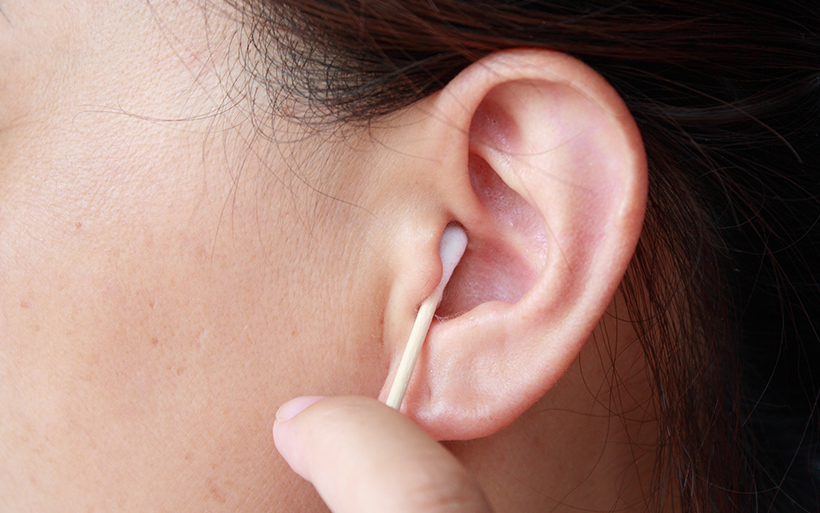
It’s tempting to presume cerumen is the cause — and reach for cotton swabs or store-bought kits. Unfortunately, these can push wax deeper and exacerbate the problem.
Health experts warn that inserting anything less substantial than your finger in your ear can lead to eardrum damage and severe clogging.
In the same way, ignoring early auditory decline can delay care that assists in preserving communication, security, and quality of life.
The Importance of a Professional Ear Exam
A brief professional check-up is the only way to confirm if wax is actually the source of your muffled hearing.
If an obstruction is identified, a clinician can clear it carefully, often returning your hearing immediately.
If no cerumen is found, a diagnostic hearing test will be used to map the type and extent of any hidden loss.
The NIDCD advises immediate assessment anytime shifts in hearing conflict with your everyday life.
Finding the Right Path for Improved Hearing
Feeling like auditory signals are muted doesn’t always indicate a lasting loss.
Very often, the issue is simply an accumulation of wax that can be easily resolved.
Obtaining expert attention guarantees you locate the exact source and the right remedy for your hearing needs.
Remember: The only reliable way to tell the distinction between cerumen impaction and hearing loss is with a clinical evaluation.
Addressing the concern now stops the stress of the uncertainty and puts you on the path to better hearing.
If you’ve observed a shift in your hearing, reach out to our clinic for a professional evaluation immediately.