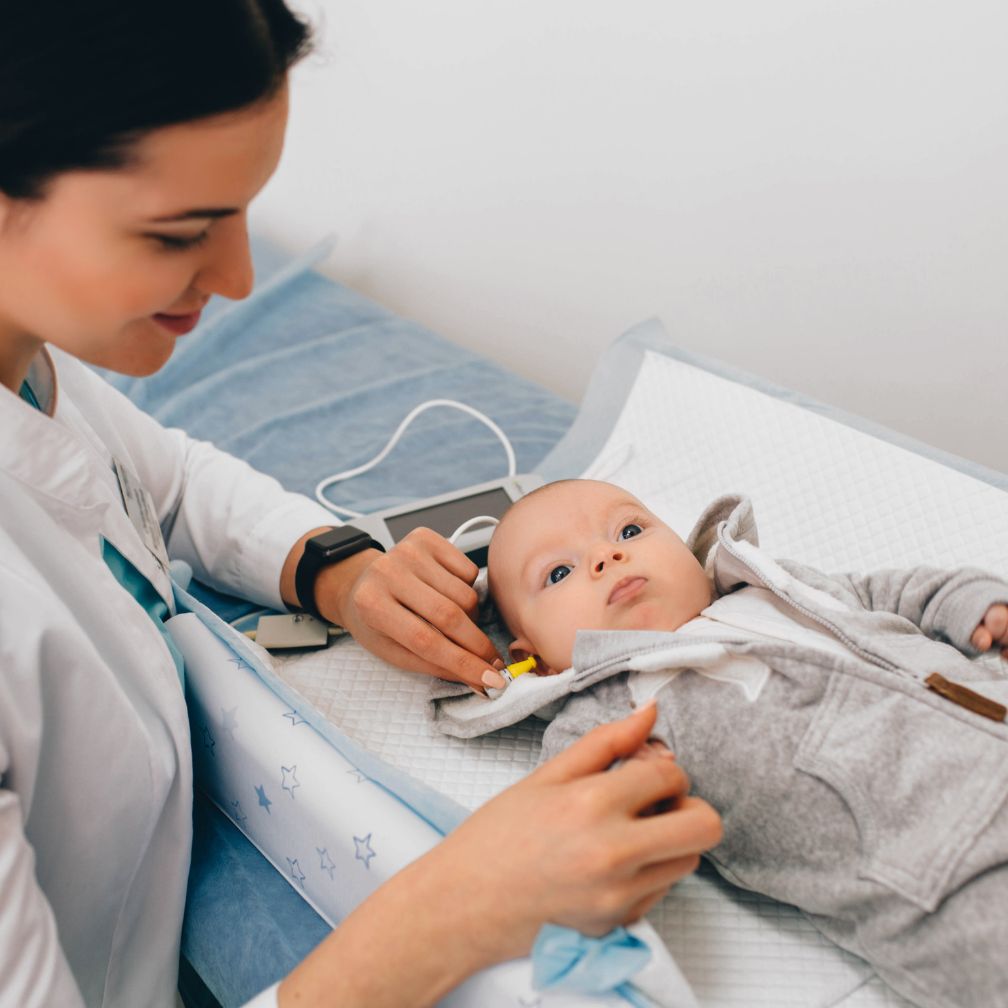
For young parents, learning that their baby exhibits auditory issues consistently seems heartbreaking and scary. Fortunately, the hopeful truth is: thanks to rapid diagnosis and early treatment, babies with hearing impairment are positioned to flourish. Positively, these infants can master verbal communication, social capabilities, and meaningful connections across their environment, attaining a truly rich existence!
Relying on modern hearing aids and advanced cochlear implants offers two effective treatment methods for backing babies with hearing impairment. Throughout this resource, we examine their functional attributes to help you choose the optimum pathway for your infant.
Analyzing Infant Auditory Deficits
Hearing impairment in young infants often develops due to a range of factors, including:
- Genetic factors (even when lacking an established family history)
- Targeted in-utero viral infections like cytomegalovirus (CMV) and rubella cases
- Severe delivery difficulties, such as acute oxygen deprivation or early birth
- Select therapeutic drugs utilized within specialized newborn intensive units
What constitutes the single most vital measure? Timely diagnostic identification. Because of this, newborns in the United States are screened for hearing loss before leaving the hospital. Qualified pediatric hearing professionals follow the established “1-3-6” care guideline:
- Early auditory screening completed prior to 1 month of life
- Definitive medical diagnosis confirmed before 90 days of life
- Early care (incorporating amplification systems or active therapy) launched within 6 months
Reaching these early milestones provides infants the best chance for healthy speech, language, and brain development. Should you require assistance regarding these auditory screens, your primary pediatrician remains ready to assist you!
Deploying Hearing Aids for Newborns
When supporting infants with mild to severe hearing loss, custom hearing aids typically represent the initial treatment approach. Such compact, fitted instruments intensify sound signals, helping infants distinguish human speech and natural sounds more clearly.
Custom wearable hearing devices for babies remain:
- Clinical grade safe for use with young infants merely weeks old
- Crafted featuring soft, pliable custom ear molds that adapt as the baby matures
- Equipped with child-resistant battery compartments and dedicated pediatric safety elements
- Precisely tuned by a certified pediatric audiologist to match your baby’s exact hearing needs
As your baby grows, these hearing instruments require routine adjustments to guarantee proper fit and maximum performance.
Cochlear Implant Options for Newborns
Where a young infant shows severe to profound sensorineural hearing impairment while demonstrating limited success with standard amplification, a cochlear device can be prescribed. Differing from external acoustic hearing aids, cochlear implant systems:
- Must be surgically installed during a specialized medical procedure
- Safely bypass non-functional structural regions within the inner ear apparatus
- Convert sound into electrical signals that activate the hearing nerve directly
Specialized pediatric cochlear implants act as:
- FDA-approved for pediatric patients aged 9 to 12 months and older
- Exceptionally beneficial when paired with early habilitation programs and dedicated family support
- Recommended exclusively following a complete diagnostic battery performed by an audiologist alongside an ENT physician
This process includes imaging, specialized auditory testing, and open dialogue concerning long-term communicative results.
Hearing Aids vs. Cochlear Implants: What’s the Difference?
- Mild to severe hearing challenges suit Hearing Aids; Severe to profound levels of loss demand Cochlear Implants
- Non-Invasive acoustic positioning: Hearing Aids; Invasive (Surgical): Cochlear Implants
- Acoustic volume boosting: Hearing Aids; Converts Sound Electrical Signals: Cochlear Implants
- Usage can begin in early infancy: Hearing Aids; Placement starts at 9-12 months: Cochlear Implants
Summary Thoughts: Supporting Your Child’s Hearing Journey
When your child is diagnosed with auditory deficits, rest assured that clear options and robust community resources exist to help you. With the help of pediatric hearing specialists, most children construct speech and language milestones fully matching their playmates.
Whether your youngster qualifies for external hearing aids or surgical cochlear implants, early action can make a lifelong difference.
Have questions about your baby’s hearing health? Reach out to us today to obtain an exhaustive evaluation and custom-designed care plan.